I believe that these images best describe the direction that I want to take my project so I chose to edit them. For the one with the arms I used the greyscale and changed it into a simple monochrome, which better displays the textures and patterns of the skin and because the backdrop is black and there is little light , the contrast of the light skin stands out well. The bottom image I kept as colour and just changed the saturation and shadows and I like the way it turned out as the colours are a lot brighter and slightly over exposed and I think this makes it look a bit like a polaroid.
Tuesday, 3 March 2015
Pictures - The human form
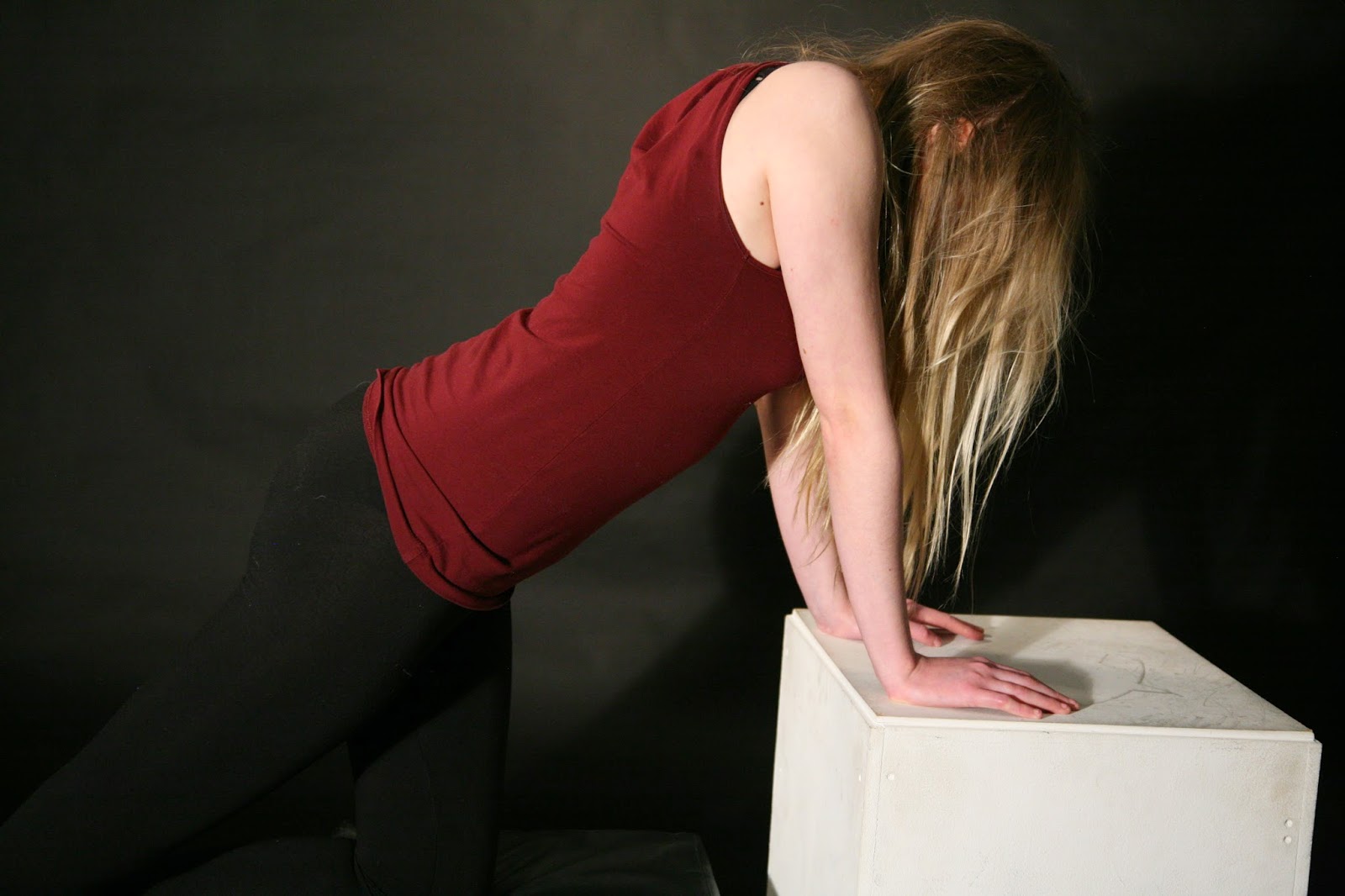
I chose to keep the background for my pictures black so the focus of the background wouldn't be drawn away the body. For the lighting I tested out how effective just basic 3-point lighting would be against the background and how it would bounce and reflect off the body. I think keeping the lighting quite basic worked better than I expected because I was able to control the brightness of each light so I could keep the colour of the background rather than it being a bit washed out and appear more grey. I kept the backlight on all of the time compared to the key light which I decided to turn off in some of the images which I like because the backlight outlines the body and adds shadow to the side and front. The fill light I controlled by turning down the brightness and think it looked best when not on full brightness.
Firstly I decided to capture just simple portrait shots facing different ways and angles, then began to take full body shots to show more of the form of the body and how I can manipulate it into a multitude of shapes. Secondly I thought I'd take some closer pictures of the skin and arms, showing the textures of the skin. I thought some of the close ups worked well because the light skin contrasted with the dark backdrop however the closer I wanted to get to the skin the blurrier the camera would go, and so to capture this better I should use a macro lens.
From these images I believe I was able to portray the form of the body rather well, from the variety of poses. However In comparison to the closer images of the arms I think they turned out a lot better than the full body shots because the model is clothed the form is not all that well to see. Macro photography and textures of the skin I will look further into.
Books
Monday, 2 March 2015
Scratching polariods
After taking my polariods and looking at Lucas Samaras' distorted polariods I thought that it would be a good idea to test out scratching my images. I cut along the bottom edge of the polariod which allowed me to peel away the back layer of film. I then used a scalpel and scratched onto the surface then turned it around to see what it looked like on the front. Then I though of using just a simple black permanent marker and drew over the indentations I had made using the scalpel, I like the effect this gave because it gave the picture back some colour and depth rather than just see through sections. I tried to smudge the ink itself but was unsuccessful as I think you need to do it as soon as the picture has developed. At first I didn't think that this technique would work because I didn't think you could open up the polariods, but after having a go I quite like the end result and how it looks a bit more scruffy, I think I will try this out on some of my better polariods.
Polariods
These are the first polariods I tested using a wide instax polariod camera. I found it quite hard to make sure I didn't get any unwanted background other than the plain black, because there is no screen to check, which is why a few of them didn't work all that well. I like the effect that polariods have even without doing anything post-production. It adds more exposure to the light areas with I think worked quite well with these in contrast to the black background. However because of the high exposure, the skin didn't pick up that clearly, it just looks quite white and bland, and I'm more interested in the close ups and textures of the skin.
I asked my model to wear simple skintight clothes, in order to be able to see the outlines of her features and muscles, and to make sure as to not have the clothes as a distraction from the initial idea behind the shots. I decided to use a small stall in the pictures, so that she had something to lean on for the more technical poses, and made sure it was just a simple stall.
Plan for polariods
Before I shoot with the polariod camera I decided to plan what I will take, because the film/paper is quite expensive and you only get 10 in a pack, as well as no viewing screen.
Monday, 23 February 2015
Tutorial
After discussing my ideas with my tutor he has suggested that I take a look at John Coplans photography because he focuses the majority of his work on the ageing body taken in black and white. Coplans rarely took pictures of the face and centralised his ideas on specific parts of the body and limbs and how they age.
Subscribe to:
Posts (Atom)